Technology
No-shot dentistry: how the Solea laser lets many fillings skip the needle
For a lot of people the needle is the worst part of a filling. A dental laser makes it possible to skip it in many cases, and it is worth understanding why rather than taking it on faith.
By Dr. Ken Goodwin, DMD6 min read
The short answer
Solea is a CO2 dental laser operating at a 9.3 micrometre wavelength, which is absorbed very efficiently by the mineral and water content of tooth structure. Because it removes decay without the heat, vibration and pressure of a drill, many routine fillings can be completed with little or no local anaesthetic, which means no numbing injection and no numb lip for hours afterwards. It is not used for every procedure and it does not replace a drill in every situation, so whether it suits a particular tooth depends on the size and position of the cavity.
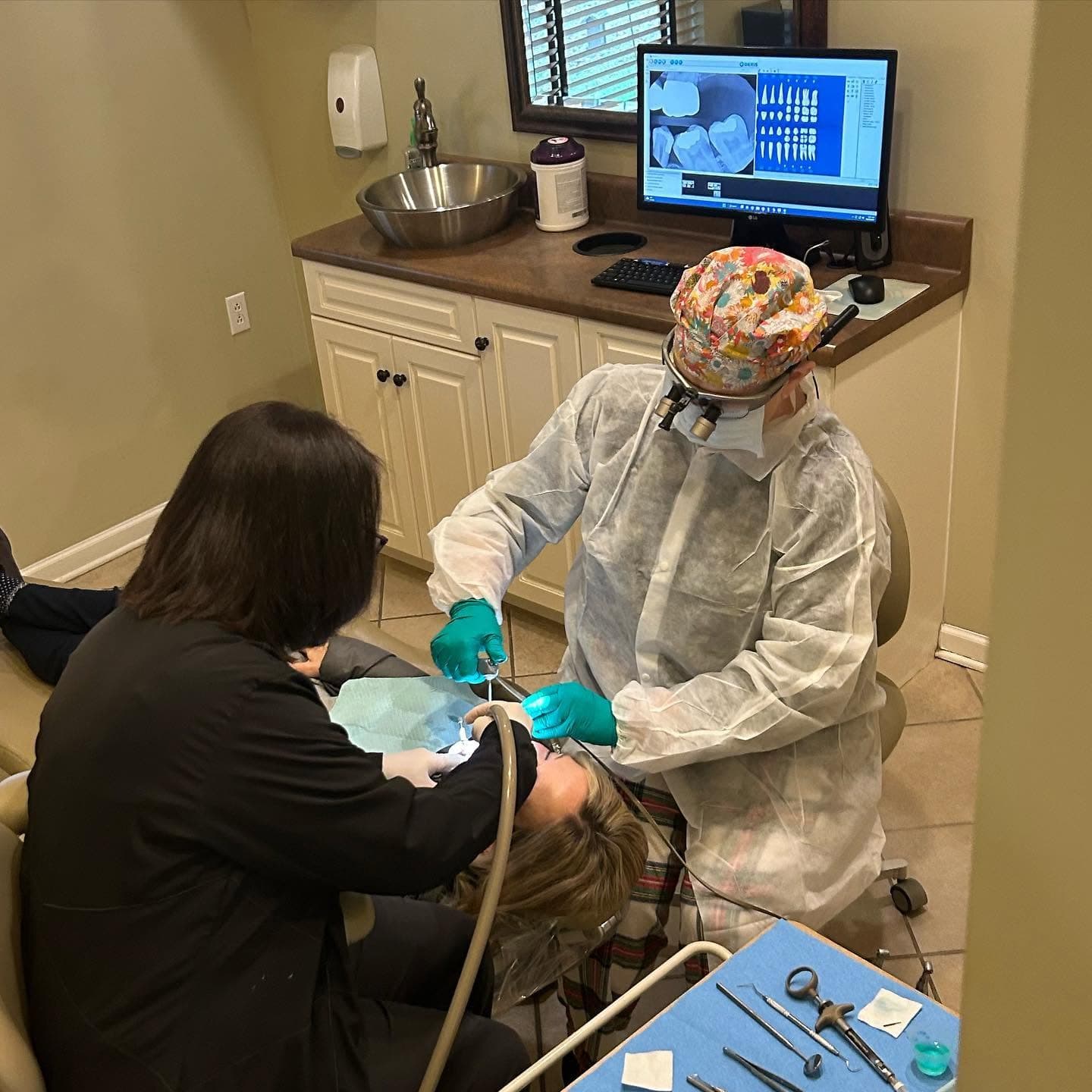
Why the drill needs anaesthetic and the laser often does not
The discomfort of a conventional filling comes largely from heat, vibration and pressure. A rotating bur generates all three, and the nerve inside the tooth responds to them. Anaesthetic is what makes that tolerable.
A laser removes tooth structure differently. The Solea wavelength is absorbed strongly by hydroxyapatite and water, so energy is deposited precisely where it lands and very little of it travels onward as heat into the surrounding tissue. There is no rotation and no contact, so no vibration and no pressure. With the main sources of the sensation gone, a good many cavities can be prepared without numbing anything.
What it actually feels like
Most patients describe a cool sensation with a fine spray of water, and a noise that is closer to a click or a patter than a whine. The absence of the drill sound matters more to nervous patients than we expected before we had one.
We are not going to call it painless. Some people feel a twinge, particularly on deeper cavities, and where that happens we stop and offer anaesthetic in the ordinary way. Nobody is asked to push through discomfort to avoid an injection.
Where it helps most
Routine fillings
The everyday case, and the one where skipping the injection makes the biggest difference to how the appointment feels.
Children
A child who does not need a needle, and who is not listening to a drill, has a very different first experience of dentistry. That first experience tends to set the tone for a long time.
Adults who dread the needle
Needle anxiety is extremely common and is often the specific reason people put off treatment for years. Removing it from the equation removes the obstacle.
Some soft-tissue work
The same laser is used for a range of minor soft-tissue procedures, where it tends to mean less bleeding and a more comfortable recovery.
Treating more than one tooth in a visit
Without anaesthetic there is no need to numb a whole quadrant, so teeth on different sides of the mouth can often be dealt with in one appointment rather than two.
What it does not replace
Being straight about the limits is the only way the rest of this page is worth anything:
- Root canal treatment, which still requires conventional instrumentation and anaesthetic
- Extractions
- Crown preparation, which removes far more tooth structure than a filling
- Existing metal fillings, which a laser cannot remove
- Deep cavities close to the nerve, where anaesthetic is usually the kinder option anyway
How to find out whether it suits your case
Ask when you book. Tell whoever answers that you would rather avoid the injection if it is possible, and we will look at whether your cavity is a candidate when you are examined. If it is not, we will say so rather than attempting it and stopping halfway.
It is also worth saying that avoiding the needle is not the only thing that helps an anxious patient, and it is not the right lever for everyone. If what you dread is the chair, the sounds or the loss of control rather than the injection specifically, that is a different conversation and we would rather have it properly.
Written and reviewed by Dr. Ken Goodwin, DMD, who has practised dentistry in Booneville since 1982. This article is general information, not a diagnosis or a treatment plan for your particular situation. For advice about your own teeth, call the practice on (662) 728-8171.