Nervous patients
Dental anxiety is real: what actually helps
If you have been putting off the dentist for years, you are in ordinary company and there is nothing to be embarrassed about. What helps depends on what specifically you dread.
By Dr. Ken Goodwin, DMD6 min read
The short answer
Dental anxiety is not a single fear, and treating it as one is why generic advice rarely helps. Some people dread the injection, some the sound and vibration of the drill, some the gag reflex, and some the feeling of not being in control or not knowing what is happening. Each of those has a different answer: needle-free laser treatment for the first, different scheduling and technique for the second and third, and clear explanation with an agreed stop signal for the fourth. The most useful step is telling the practice which one applies to you before you are in the chair, because it changes how the appointment is arranged.
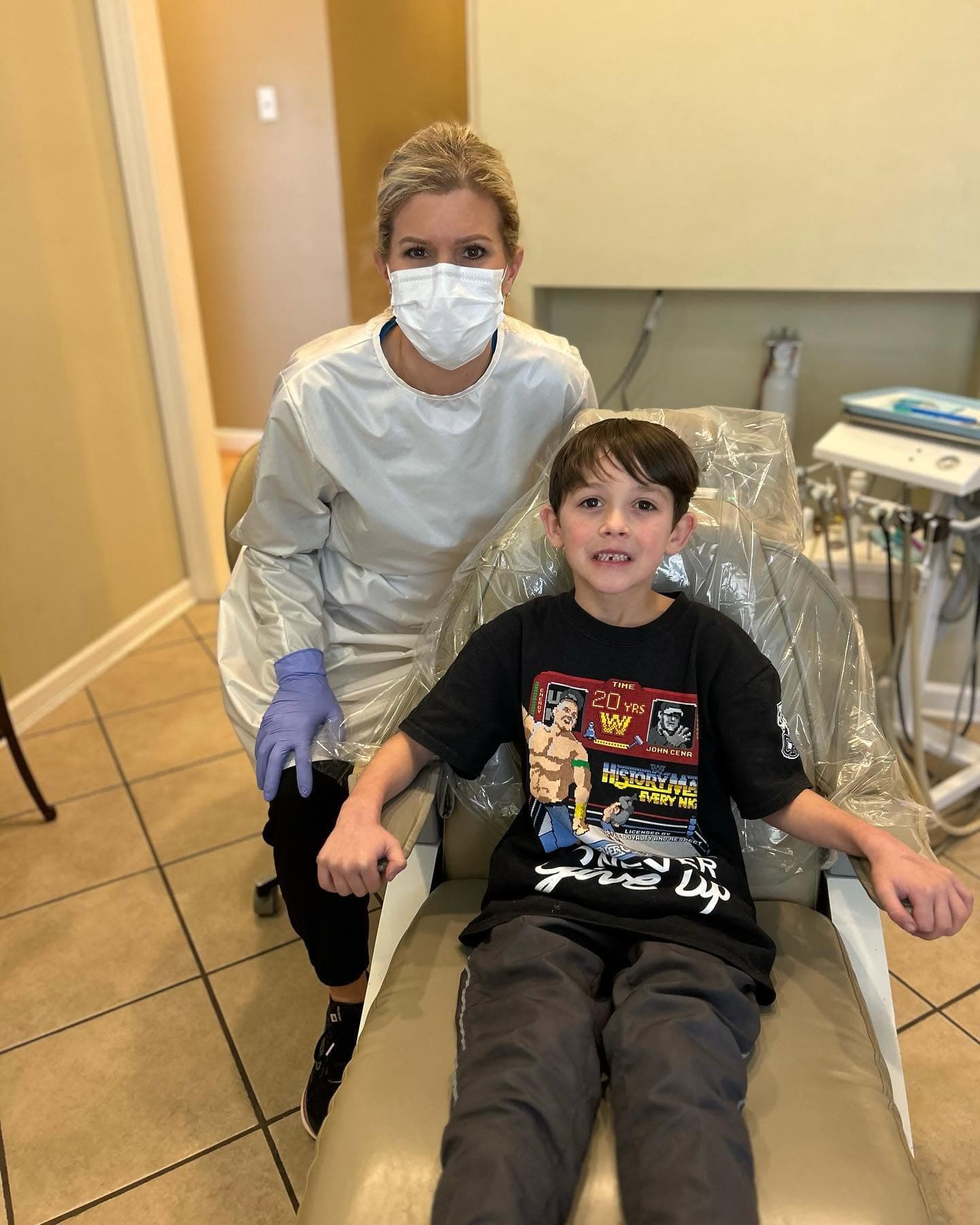
It is more common than you think, and the gap makes it worse
A large share of adults feel some anxiety about dental treatment, and a meaningful number avoid it altogether. The difficulty is that avoidance compounds: small problems become larger ones, the eventual visit involves more treatment than it would have done, and that visit confirms the fear. Then the gap gets longer.
Mississippi has some of the poorest oral health outcomes in the country, and access, distance and fear all contribute. If it has been five or ten or twenty years, you are not the exception here and you will not be lectured about it.
Work out which fear is actually yours
These get lumped together as being scared of the dentist, but they are different problems with different solutions.
The needle
By far the most common single fear, and the one with the most direct answer. We use the Solea dental laser, and for many routine fillings that means little or no anaesthetic is needed, so there is no injection at all. Whether it suits your case depends on the cavity, so ask when you book.
The sound and the vibration
For some people the whine of the drill is worse than anything it does. The laser is markedly quieter, and there is no vibration because nothing rotates or touches the tooth. Bringing headphones and your own music is not a gimmick either: it genuinely helps, and nobody here will find it odd.
Gagging
A strong gag reflex is a physical response, not something you are doing wrong. It can usually be worked around with how you are positioned, what is used for impressions and how long anything stays in your mouth. Tell us before we start rather than after.
Not being in control
This one is about information and agency rather than technique. It helps to know what is going to happen before it happens, to have an agreed hand signal that stops everything immediately, and to know that stopping is a normal thing that people do.
Embarrassment about the state of your teeth
Extremely common and rarely talked about. It is worth saying plainly that we have seen it all, that nobody here is going to make you feel judged, and that we would far rather see you now than in another five years.
What a first visit can look like if you ask for it
You do not have to arrive and submit to whatever happens. This is a reasonable thing to request and we are used to it.
Say so when you book
Tell the front desk you are a nervous patient. It goes on your record before you arrive, so you do not have to explain yourself in a waiting room.
Come and talk first, with nothing else planned
A first appointment can be a conversation and a look, with no treatment at all. Some people need to see the room and meet the person before anything else is possible.
Agree a stop signal
A raised hand means everything stops. Not slows down, stops. Knowing that in advance changes how the whole appointment feels.
Ask for a running commentary, or ask for none
Some people are calmer knowing exactly what is happening next; others would rather not hear it. Both are fine, and it is worth saying which you are.
Start small and build
There is no rule that says everything must be fixed at once. Doing one straightforward thing, successfully, is often what makes the rest possible.
About sedation
Why a small practice can help with this
Dr. Goodwin has practised in Booneville since 1982 and has treated three generations of some families here. That continuity matters more for nervous patients than for anybody else: seeing the same person each time, in a practice where the front desk knows who you are, removes a layer of unfamiliarity that a larger or more transient practice cannot.
It also means appointments are not run against a stopwatch. If you need a few extra minutes at the start, there are a few extra minutes.
Written and reviewed by Dr. Ken Goodwin, DMD, who has practised dentistry in Booneville since 1982. This article is general information, not a diagnosis or a treatment plan for your particular situation. For advice about your own teeth, call the practice on (662) 728-8171.