Restorative Dentistry
If you have damaged or missing teeth, crowns and bridges are an excellent way to restore both the function and appearance of your smile. At Park Place Dental, we focus not only on strength and durability, but also on creating natural-looking, cosmetic results that help you feel confident every time you smile.
What are crowns and bridges?
A dental crown is a cap that covers a damaged or decayed tooth. Crowns restore the shape, strength, and function of the tooth, while also improving its appearance.
A bridge is a fixed restoration used to replace one or more missing teeth. It spans the gap left by the missing tooth, anchored to adjacent teeth or dental implants for stability.
Benefits of crowns and bridges
Natural, cosmetic results
Crowns and bridges are carefully designed to match the color, shape, and contour of your natural teeth, creating a seamless, confident smile.
Durability
Both crowns and bridges are made from high-quality materials that are built to last.
Restore function
These restorations restore the ability to chew, speak, and smile confidently.
Prevent shifting
Bridges help maintain the alignment of your remaining teeth, preventing them from shifting into the gap left by missing teeth.
The crown and bridge process
Consultation and planning
We begin by evaluating the condition of your teeth and discussing the best options for restoring them with crowns or bridges.
Preparation
If you are getting a crown, the damaged tooth is prepared by removing decay or reshaping the tooth to accommodate the crown. For a bridge, the adjacent teeth are prepared to serve as anchors.
Impressions
We take precise impressions of your teeth to ensure your custom-made crown or bridge fits perfectly.
Fitting
Once your restoration is ready, we place the crown or bridge, making any necessary adjustments to ensure a perfect fit and comfortable bite.
Same-day crowns and our in-house lab
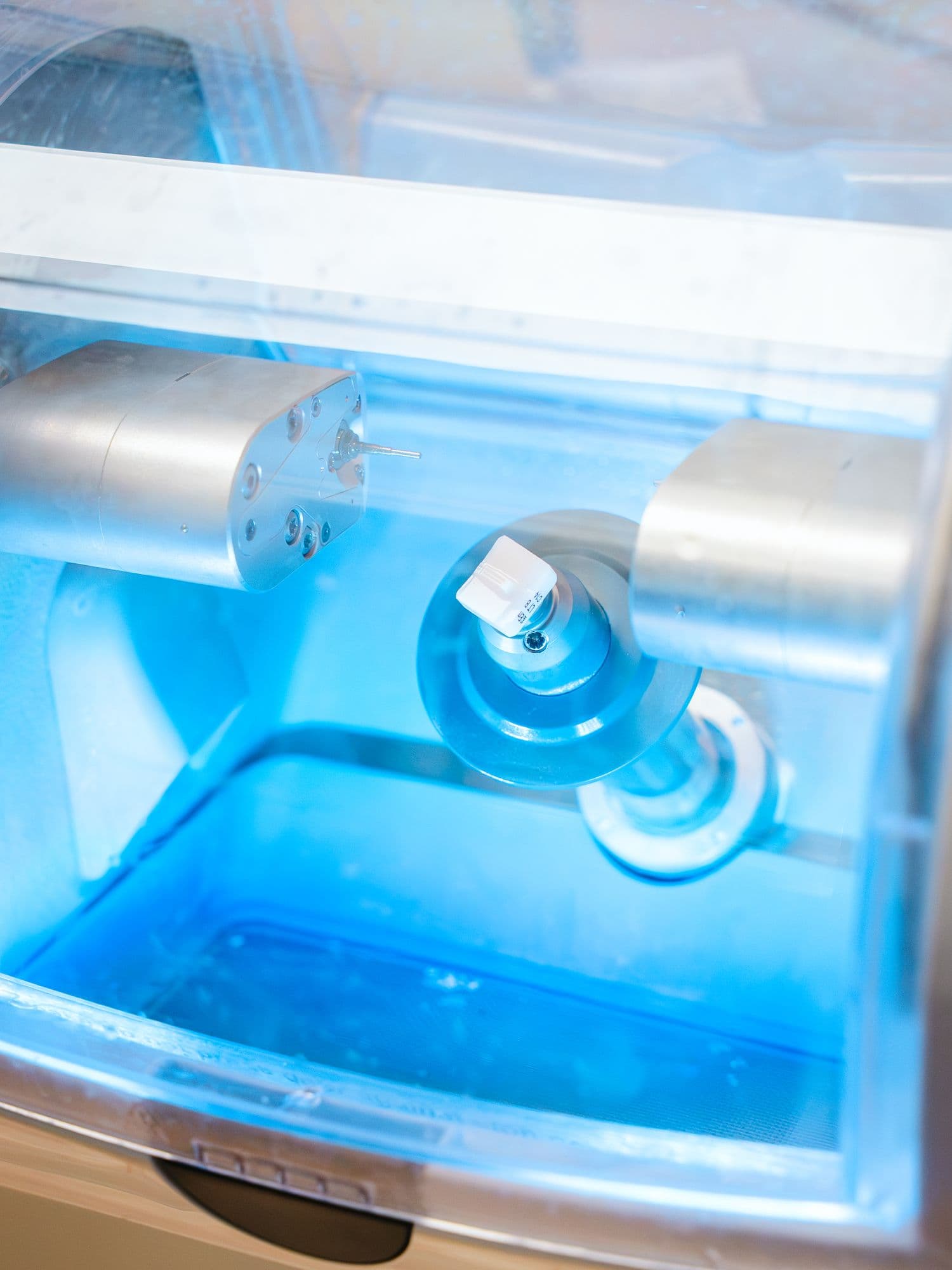
Our in-house lab supports crowns and bridges, including same-day crowns when suitable. The dentist will assess the tooth and discuss materials, timing, any outside work and follow-up before confirming your plan.
Modern dental bridgework is about more than replacing missing teeth. It is about restoring your smile's appearance. Our custom bridges are designed with aesthetics in mind, ensuring they blend beautifully with your surrounding teeth for a natural, balanced look.
When a crown is the right answer, and when it is not
After a root canal, usually yes
A tooth that has had root canal treatment is more brittle than it was and is prone to fracturing. A crown protects what is left, and a fractured root often cannot be saved at all.
For a large cavity or an old, failing filling
Where too little sound tooth remains to hold a filling reliably, a crown rebuilds the whole biting surface. A filling that keeps breaking is telling you something.
For a cracked tooth
A crown holds a cracked tooth together and can stop the crack spreading. How well it works depends on where the crack runs, which is not always visible until we look.
Not simply for appearance
If the tooth is sound and it is only the look you want to change, a veneer or bonding removes far less tooth structure. We would rather point you at the smaller intervention.
Bridge or implant?
Both replace a missing tooth and they involve entirely different trade-offs. A bridge joins to the teeth on either side of the gap, which means those teeth are reshaped to carry it. Where they already have large fillings or crowns, that is no great loss. Where they are pristine, it is a real cost and worth weighing.
A bridge is quicker, usually less expensive, and does not involve surgery. An implant leaves the neighbouring teeth alone, helps preserve the bone under the gap, and takes months rather than weeks.
The honest summary: if the teeth either side need work anyway, a bridge often makes sense. If they are healthy and untouched, it is worth at least discussing an implant before reshaping them.
What to expect, and how to look after it
Preparing the tooth
Done under local anaesthetic. The tooth is shaped so the crown fits over it, and a scan or impression is taken. Some tenderness for a few days afterwards is normal, particularly if the tooth was already inflamed.
Made here, not posted away
Our dental laboratory is in the building, which shortens the wait and means adjustments are a short visit rather than another round trip. Whether a specific crown can be finished in one appointment depends on the tooth and the material.
If you have a temporary
Avoid anything very sticky on that side and floss by pulling the floss out sideways rather than up, so you do not lift the temporary off.
Looking after the finished crown
Brush and floss it exactly like a natural tooth. Decay starts at the margin where crown meets tooth, and that margin is the part that needs the floss.
If you grind your teeth
Tell us. Grinding is one of the main reasons crowns and bridges fail early, and a night guard is a great deal cheaper than a remake.
Crowns & Bridges Questions
Many crowns can be made and fitted here rather than sent to an outside laboratory, because our dental lab is in the building. Whether a given crown can be finished in a single visit depends on the tooth and the material, so ask when it is planned.
A crown covers and protects one damaged tooth. A bridge replaces a missing tooth by joining to the teeth on either side of the gap. If the neighbouring teeth are healthy and untouched, an implant is often worth considering instead of reshaping them for a bridge.
Crowns commonly last many years and often well over a decade, with the range depending on the material, where the crown sits, your bite, and whether you grind your teeth. They need the same brushing and flossing as a natural tooth.
Preparing a tooth for a crown is done under anesthetic and is usually comparable to having a filling. Some tenderness in the days afterwards is normal, particularly if the tooth was already inflamed.
Keep it, avoid chewing on that side, and call us. A crown that has come off cleanly can often be recemented, and because our lab is here, one that cannot be reused can usually be remade faster than if it had to be sent away.
Before your visit
Answers to help you plan your care
Crowns
Same-day or traditional crown: what changes about your visit?
One longer visit or separate appointments? Here is how to discuss crown options, timing and the right fit for your tooth.
Missing teeth
Implants, bridges or partial dentures: how to compare missing-tooth options
The right question is which replacement fits your mouth and your priorities. Start with the differences, then bring these questions to your consultation.
Emergency care
Cracked a tooth or knocked one out? What to do in the first hour
A knocked-out tooth has its best chance in the first hour. Here is what to do for each kind of dental emergency, and how to tell what needs a dentist today from what needs a hospital now.
More Restorative Dentistry
Dental Implants
Dental implants replace missing or severely damaged teeth with something that looks, feels and functions much like a natural tooth. Whether you are missing a single tooth or need a full arch replaced, an implant is a durable, long-term option that restores both the function and the appearance of your smile, and the crown that goes on top is made in our own lab.
Learn moreDentures
Dentures are a reliable and affordable solution for individuals who have lost multiple teeth. Whether you are missing a few teeth or an entire set, dentures can restore both the appearance and function of your smile, allowing you to eat, speak, and smile with confidence once again.
Learn more
Do not let damaged or missing teeth affect your confidence or oral function. Whether you are looking to restore function or enhance your smile's appearance, our custom crowns and bridges are designed to deliver lasting, natural-looking results.