Restorative Dentistry
Dentures are a reliable and affordable solution for individuals who have lost multiple teeth. Whether you are missing a few teeth or an entire set, dentures can restore both the appearance and function of your smile, allowing you to eat, speak, and smile with confidence once again.
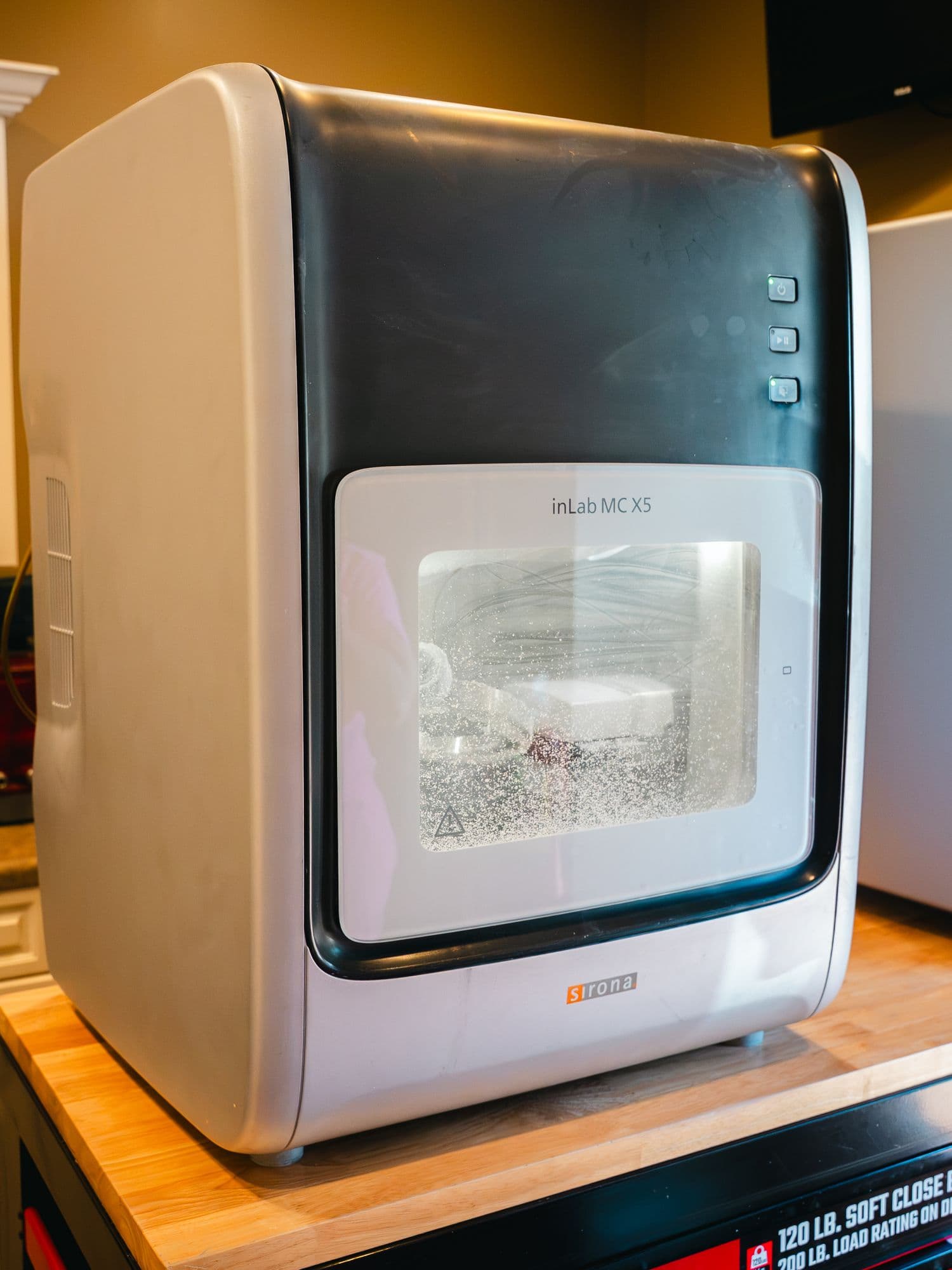
Our in-house lab supports denture care. The dentist must assess your mouth and appliance before confirming whether repair, reline or replacement is suitable and how long it will take.
What are dentures?
Dentures are removable prosthetic devices that replace missing teeth. They are custom-designed to fit your mouth and restore both the function and aesthetics of your smile. Dentures can be full, replacing all teeth, or partial, replacing only some teeth, depending on your needs.
Benefits of dentures
Restored appearance
Dentures fill the gaps left by missing teeth, enhancing your facial appearance and boosting your confidence.
Improved function
Dentures restore your ability to chew food properly and speak clearly, making everyday activities easier and more comfortable.
Comfortable fit
Our dentures are custom-made to fit your mouth perfectly, providing a snug, comfortable fit.
Affordable
Dentures are a cost-effective option for replacing multiple teeth.
Types of dentures
Full dentures
Designed for patients who are missing all their teeth, full dentures replace an entire upper or lower set of teeth.
Partial dentures
Used when some natural teeth remain, partial dentures fill the gaps left by missing teeth and attach securely to your remaining teeth.
Implant-supported dentures
These dentures are supported by dental implants, providing extra stability and preventing slippage.
The denture process
Consultation
We evaluate your oral health and discuss the best denture option for you.
Impressions
Our team takes precise impressions of your mouth to create custom dentures that fit comfortably.
Fitting and adjustments
After your dentures are made, we ensure they fit properly and make any necessary adjustments to ensure comfort and function.
Final placement
Once everything is in place, you will leave our office with a restored smile and improved functionality.
The kinds of denture, and who each suits
Full dentures
Replace every tooth in an arch and rest on the gum. An upper denture is usually more stable than people expect, because the palate provides suction. A lower one has far less to hold it, which is why it is the more common source of complaint.
Partial dentures
Fill the gaps where sound natural teeth remain, clasping onto them for support. Keeping your own teeth is generally worth doing, and a partial is what makes that possible.
Immediate dentures
Fitted the same day teeth are removed, so you are not left without them. The gum shrinks as it heals underneath, so an immediate denture is relined or remade once things have settled. That is planned for, not a failure.
Implant-supported dentures
Clip onto a small number of implants rather than resting on the gum. Markedly more stable, particularly for a lower denture, at a considerably higher cost and over a longer timeline.
Living with a new denture: what the first months are like
Nobody puts in a new denture and forgets about it. Knowing the normal course makes the difference between persevering and giving up.
The first few days
It will feel bulky and your mouth will produce more saliva than usual. Both settle. Sore spots are common and are fixed with a small adjustment, so ring us rather than enduring them.
Learning to eat again
Start with softer food cut small, and chew on both sides at once rather than one. Most people are managing normally within a few weeks, and the things that stay difficult longest are usually very hard or very sticky.
Learning to speak again
Certain sounds take practice. Reading aloud to yourself for a few minutes a day is genuinely the fastest way through it, however odd it feels.
Cleaning it properly
Dentures are brushed and soaked daily, and taken out overnight unless you have been told otherwise, so the gum gets a rest. Clean your gums and tongue too.
Relines, over the years
The ridge under a denture keeps changing shape, so a denture that fitted perfectly will loosen with time. A reline refits it to the mouth you have now, and it is maintenance rather than a sign anything went wrong.
The part people are not told about: bone
When teeth come out, the bone that held them is no longer loaded by chewing and begins to shrink. This carries on for years and it is why an old denture can look too big for the face around it.
A conventional denture does not change that process. Implants do slow it, because they transmit chewing force into the bone. It is worth knowing early, because the more bone you have when you decide, the more options you have.
None of which means a conventional denture is the wrong choice. It means the decision has a timing element, and you should make it knowing that.
Why our lab matters more for dentures than for anything else
Dentures need adjusting. That is not a defect, it is how they work: a piece of acrylic fitted to living tissue that changes shape. The practical question is how long each adjustment takes.
Our in-house lab supports denture work, but turnaround depends on the assessment, procedure and schedule. Ask how long you may be without the denture and whether a separate fitting visit is needed before travelling.
Dentures Questions
Most people need a few weeks to adjust to speaking and eating with a new denture, and it is normal for it to feel bulky at first. Sore spots in the early days are common and are usually solved with a small adjustment rather than by waiting it out.
Usually, yes. Jawbone changes shape over the years after teeth are lost, so a denture that fitted well once will eventually loosen. A reline refits the existing denture to the shape your mouth is now, and implant-supported options are available where a reline is not enough.
Some repairs may be suitable for same-day work, but the damage, fit and schedule need assessment first. Call before travelling and bring the denture and all pieces. Ask when the team can confirm turnaround.
A full denture replaces all the teeth in an arch and rests on the gum. A partial fills the gaps where some natural teeth remain and clasps onto them for support. Keeping natural teeth where they are sound is generally worth doing.
Not usually. Where teeth need removing, an immediate denture can often be fitted the same day so you are not left without them, and then relined or replaced once the gum has healed and settled.
Before your visit
Answers to help you plan your care
Dentures
Broken denture: repair, reline or replacement?
A break and a poor fit are different problems. Understand the options before arranging a denture assessment in Booneville.
Missing teeth
Implants, bridges or partial dentures: how to compare missing-tooth options
The right question is which replacement fits your mouth and your priorities. Start with the differences, then bring these questions to your consultation.
Veterans
VA dental benefits in Mississippi: what veterans need to know before booking
Being enrolled in VA health care and being eligible for VA dental care are two different things, and the gap between them catches a lot of people out. Here is how the eligibility classes actually work.
More Restorative Dentistry
Dental Implants
Dental implants replace missing or severely damaged teeth with something that looks, feels and functions much like a natural tooth. Whether you are missing a single tooth or need a full arch replaced, an implant is a durable, long-term option that restores both the function and the appearance of your smile, and the crown that goes on top is made in our own lab.
Learn moreCrowns & Bridges
If you have damaged or missing teeth, crowns and bridges are an excellent way to restore both the function and appearance of your smile. At Park Place Dental, we focus not only on strength and durability, but also on creating natural-looking, cosmetic results that help you feel confident every time you smile.
Learn more
If you are missing multiple teeth, dentures can help restore your smile and your quality of life. Contact Park Place Dental today to learn more about our custom dentures and how they can benefit you.