Dental implants
Same-Day Dental Implants: Who Qualifies and Who Should Wait?
A shorter wait for a replacement tooth is appealing. Understanding what happens on surgery day, what still needs to heal, and what could change the plan makes the decision clearer.
By Park Place Dental5 min read
The short answer
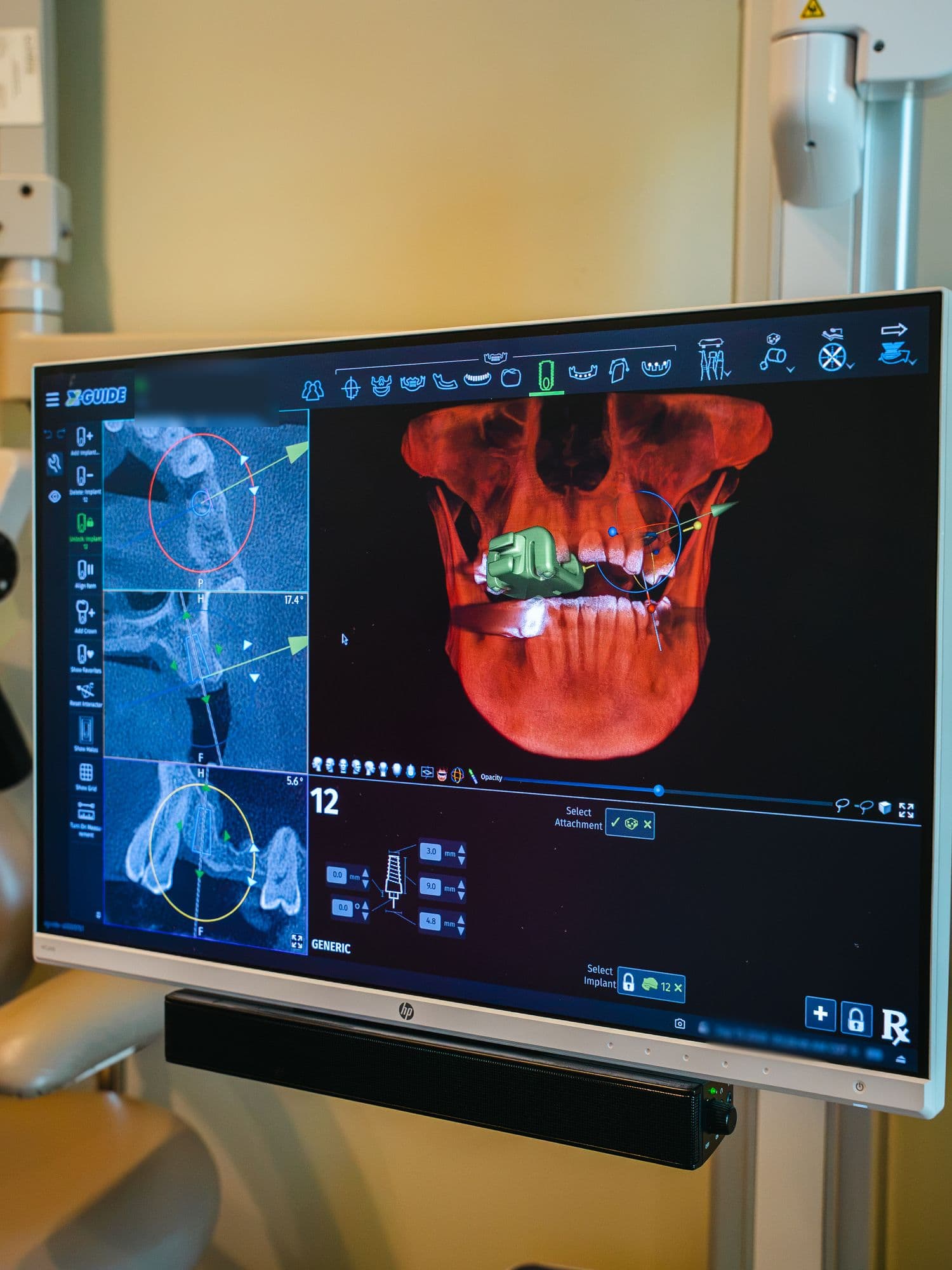
Some patients can receive a dental implant and a temporary replacement tooth in the same appointment. That does not mean the implant has healed or the final tooth is finished. Suitability depends on the health of the mouth, available bone, bite and initial implant stability. An examination and imaging guide the plan, but the dentist may need to change it during surgery.
What does “same-day” actually mean?
Ask which part of treatment is happening that day. Immediate placement means inserting an implant when a tooth is removed. Immediate restoration means attaching a replacement tooth soon after implant placement. Loading describes whether that restoration takes biting forces. These are separate decisions, and one does not automatically lead to another.
A temporary tooth may help with appearance while the implant heals. It is not permission to eat normally on that tooth. Ask whether the proposed restoration is temporary or final, what you can chew, and when the next stage will happen.
Same-day restoration and staged treatment compared
Swipe across the table to compare all options.
| Question | Same-day restoration | Staged treatment |
|---|---|---|
| When is a tooth attached? | A selected case may receive a temporary tooth at implant placement. | The implant heals before a restoration is attached. |
| Is healing complete? | No. Bone still needs to integrate with the implant. | No. Healing is built into the interval between stages. |
| What should I ask? | What happens if the implant is not stable enough on surgery day? | What can replace the missing tooth during healing? |
| What is the goal? | An appropriate restoration without compromising healing. | An appropriate restoration without compromising healing. |
Who may be a candidate?
Initial stability matters: the implant must be secure in the right position before a dentist considers an immediate restoration. Bone is only part of the assessment. Gum condition, the bite, general health and the planned tooth all affect the decision.
A single front tooth and a full arch of replacement teeth involve different planning. Results or eligibility criteria for one should not be assumed to apply to the other. Ask which approach the dentist is describing for you.
What your dentist will assess
- The amount and condition of bone where the implant needs to sit.
- The health of the gums and nearby teeth, including any infection.
- How the teeth meet and whether grinding or clenching could overload the restoration.
- Medical history, medicines, tobacco use and conditions that affect healing.
- Whether the proposed restoration can be protected during recovery.
Why might the dentist recommend waiting?
If the implant cannot achieve suitable stability, attaching a tooth immediately may be inappropriate. Bone or gum treatment, management of disease, or changes to the restoration plan may be needed first. Some patients become candidates after preparatory care; others are better served by a different approach.
Smoking increases the risk of implant failure. Simply delaying the replacement tooth does not remove that risk. Discuss tobacco use honestly and ask for a cessation and follow-up plan suited to your treatment. A review of implant studies found higher failure rates among smokers, but it does not predict any individual patient’s outcome.
What happens after the appointment?
The implant still needs to join with the surrounding bone, a process called osseointegration. Follow your dentist’s food, cleaning and review instructions even if the replacement tooth looks finished. The ADA describes healing as a distinct stage of implant treatment; some patients need several months before receiving their replacement teeth.
Plan around the full course of care, including follow-up and the final restoration, rather than the first appointment alone. If you are traveling to the office, ask how many visits are anticipated and whom to contact if a problem occurs between them.
Bring these questions to your consultation
- Am I discussing immediate placement, a temporary tooth, or a final restoration?
- What findings could change the plan before or during surgery?
- Who will provide the surgical and restorative stages?
- What chewing restrictions and follow-up visits should I expect?
- Does the written estimate include imaging, preparatory treatment, temporary teeth and the final restoration?
Discuss your options in Booneville
Park Place Dental is in Booneville, Mississippi. Start with an implant consultation to discuss the missing tooth, your goals and the treatment sequence appropriate for you. Ask the team which procedures are available at the practice and whether another provider would be involved. A consultation request does not establish eligibility for same-day treatment.
Prepared by Park Place Dental using the patient-education sources linked in this article. This article is general information, not a diagnosis or a treatment plan for your particular situation. For advice about your own teeth, call the practice on (662) 728-8171.